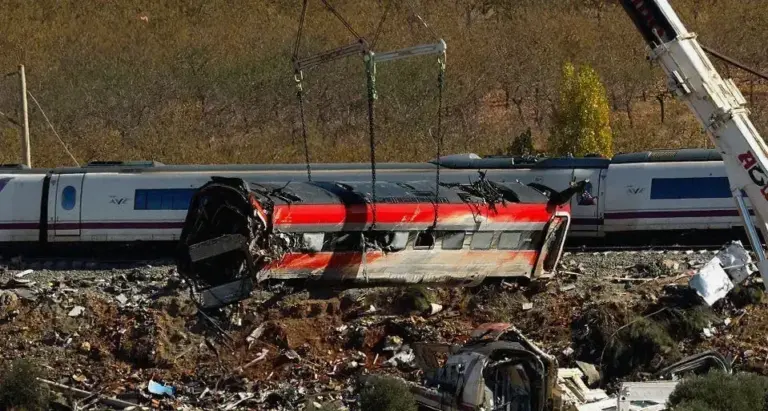
A devastating rail collision in the province of Toledo has left at least 69 people dead, including four American citizens, according to official reports released Sunday. The accident occurred last week when a high speed train traveling from Madrid to Seville slammed into the rear of a stopped train, causing two carriages to derail. In addition to the American victims, authorities have identified deceased passengers from Canada, Japan, Argentina, Mexico, Tunisia, and the Czech Republic. While most of the casualties have been identified, officials are currently awaiting the arrival of several families who wish to perform final identifications in person.
The crash has ignited a fierce debate over safety and staffing within Spain’s prestigious rail network. Transport Minister Oscar Puente suggested that poor judgment by a traffic controller played a significant role in the disaster. However, railway unions are pushing back against this narrative, arguing that deteriorating working conditions and an overwhelmed workforce are the true culprits. They claim that a dwindling number of controllers are being forced to manage increasing workloads, creating a dangerous environment for millions of daily commuters.
Preliminary data from independent investigators paints a grim picture of the moment of impact, indicating that the state owned Renfe train was barreling along at speeds between 100 and 125 mph when it struck the privately owned Iryo train. This tragedy marks the second major collision on the Madrid to Seville line this year, following a January derailment that killed 46 people. For a network that was once celebrated globally for its flawless safety record over three decades, these recent disasters represent a sobering shift in the reliability of one of the world’s largest high speed rail systems.